Here's a quick comparison. Same voice-over, same first word.
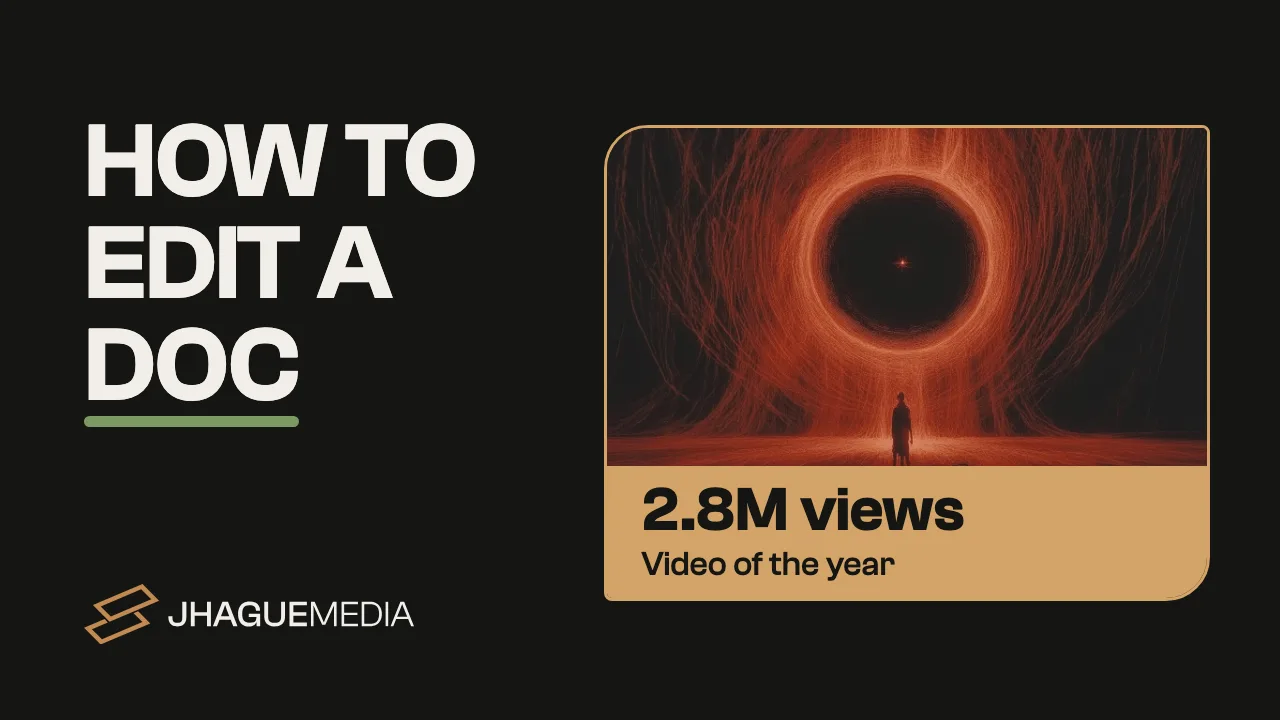
Over the last two years my team at JHagueMedia has edited 16 documentaries for Thoughty2, a channel with 5.7 million subscribers. They've had more than 16 million views between them, and one became the channel's video of the year.
 We've Just Found a New Type of Star and It's TerrifyingThoughty2 · 2.8M views
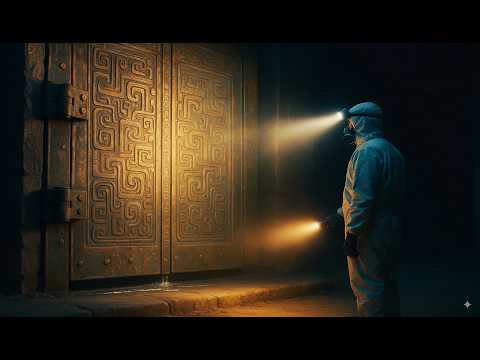 Why Have We Never Gone Inside the Biggest Tomb on Earth?Thoughty2 · 1.8M views
 We Just Found Something In the Amazon That Rewrites HistoryThoughty2 · 1.7M views
 Something Happened Over The Ocean And The Truth Is Worse Than You ThinkThoughty2 · 1.6M views
 Blue Whales Shouldn't Exist. So Why Do They?Thoughty2 · 1.5M views
 The Spaceship Design So Good We're Not Allowed to Use ItThoughty2 · 1.0M views
And here's what I've noticed: very few editors can do this kind of work. Almost every documentary I've handed to a new editor comes back with the same basic mistakes, the same ones I used to make. Most videos on this topic are tutorials, and tutorials show you how. This is about the why, because once you understand the why, the how follows.
Principle 1: Research comes before the first cut
This is where most YouTube documentaries fail before they've started. When we trialed editors for Thoughty2, every one of them got the same minute of voice-over: the Everest opening above. The difference between their cuts and Saulius's wasn't software. It was the fonts, the music and the images, and all three come from research.
Most editors get the footage and start adding cuts and motion graphics straight away. That's the wrong way around. The Russian director Vsevolod Pudovkin wrote that the editor's job is the "psychological guidance" of the viewer (Wikipedia). You can't guide someone through a world you haven't explored yourself.
On every documentary, Saulius reads the script first and makes notes on its themes, tone and flavor. Everything follows from that: the graphics, the pacing, the imagery, the music. The tomb video is set in ancient China, so its fonts, motifs and maps all belong there.
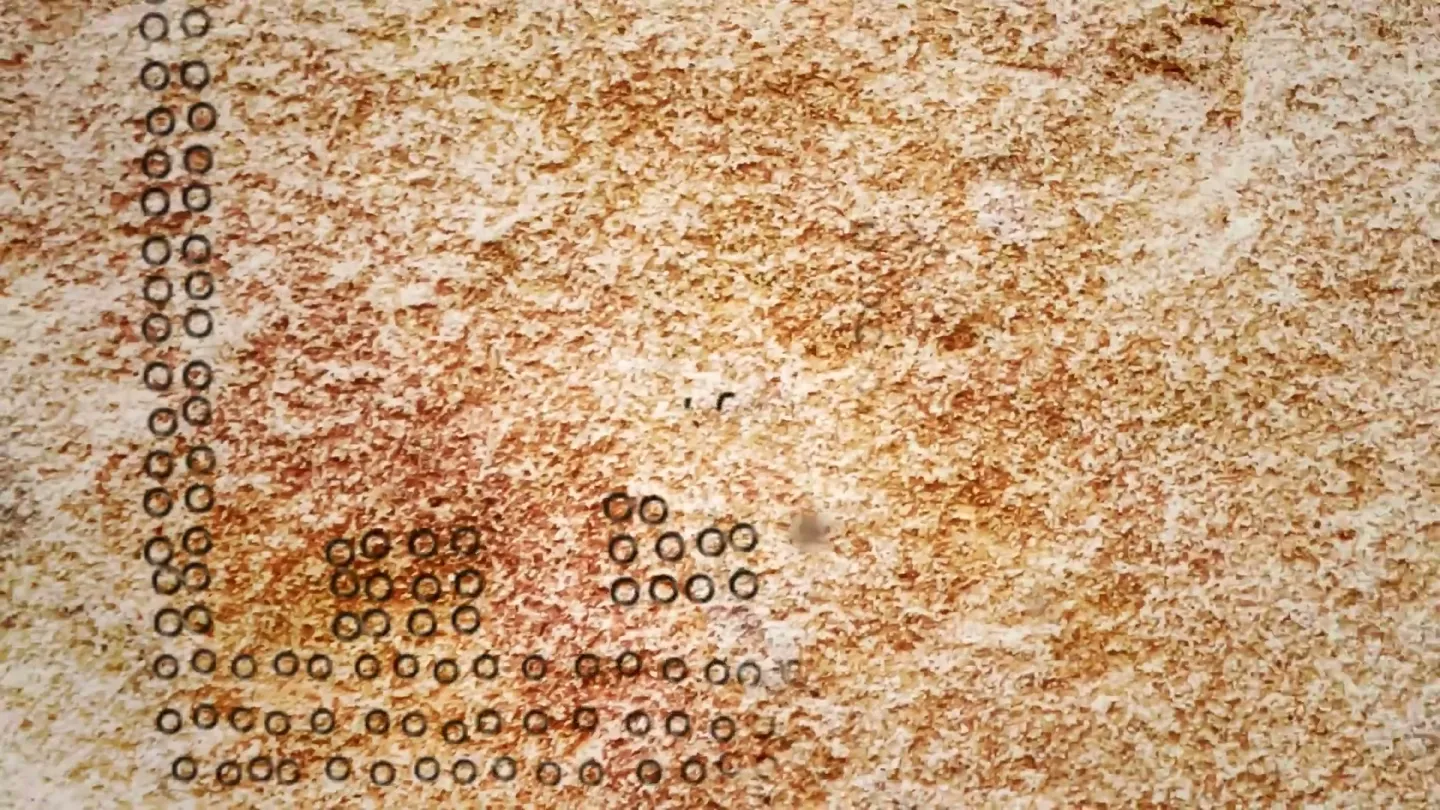
In research you're not just collecting facts, you're looking for the story. Most stories have three acts: the setup shows the world and what's at stake, the confrontation is where things go wrong, and the resolution is where it lands. On YouTube the setup happens in the first 10 seconds, because that's when people decide to stay (more on that in how to read a retention graph).
Go one level deeper and you get the hero's journey (Joseph Campbell): an ordinary world, a call, a threshold, trials, an ordeal and a return. In a documentary the hero doesn't have to be a person. In our Project Orion video it's a spaceship.
| Act | Project Orion | Runs |
|---|---|---|
| Setup | Humanity needs a way off Earth | 0:00 to 1:49 |
| Confrontation | A ship powered by nuclear bombs, the people who built it, the treaty that killed it | 1:50 to 21:00 |
| Resolution | What we lost | 21:01 to the end |
When the research is done, you should be able to say where the setup ends, where the confrontation peaks and how it resolves. If you can't, you don't have a story yet. You have a list of facts.
Principle 2: Animation, hierarchy and color
Animation should bring the story to life, but the way most editors use it makes videos feel tone-deaf. It comes down to three things.
Hierarchy: what should I look at first?
In a good frame every element is in order of importance, so the eye knows where to go. Build every layout on a grid and nothing is out of place. The most common mistake is what I call the animation problem: too many elements, too many colors, because more feels better. It's usually worse.
Tone and color: does it feel like this story?
A light story should look lighter. A story about China should have fonts and graphics that belong in China. For color, pick a primary, a secondary and one accent, and keep to them.
Focal points: where does the eye land?
Every scene needs one. If the focal point jumps from top left to center right while you're cutting fast, you lose the viewer. Keep it in the same third of the frame across cuts and the sequence feels smooth for free.
You don't need Blender or 3D for any of this. Doing the basics really well is the whole difference, which is also the argument of the problem with modern video editing.
Principle 3: Show, don't tell
If a story is about a rich businessman, don't have him say he's rich. Show the watch, the car and the house. In a documentary edit, the most common version of telling is big text repeating the voice-over word for word over a stock image that could sit in any video on the topic.
Instead of saying the tomb is huge, we drew it, then put Manhattan next to it.
Showing takes research. If the script says Mao's policies devastated China, spend the hours to find the year-by-year figures from 1958 to 1962 and build them into a timeline, instead of putting up a painting of an emperor. Storytelling is making people live in the reality of what's being said.
Principle 4: Music and sound
Music tells the viewer how to feel about what they're seeing. The same footage with two different tracks tells two different stories. So why do most of us choose it last?
Music first. Find it before you touch the graphics. Your cuts land on its beats and your animation breathes with it. Music moves with the story: when the story turns, the track turns. Sound is a cake: a music bed, ambience, foley and accents, all belonging to this story. Stock effects carry stock tone.
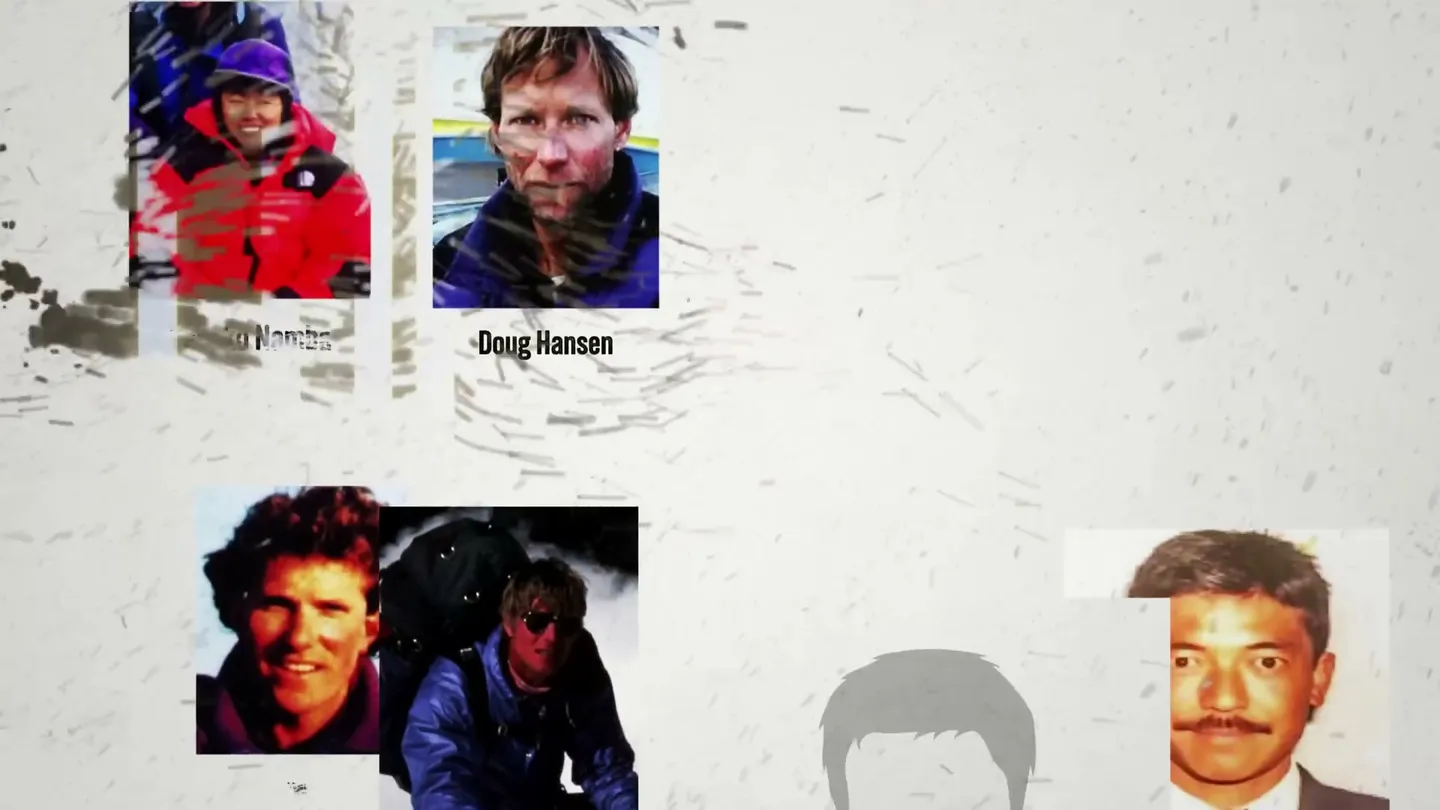
Here's all of it working together, in the Everest opening:
| Time | What changes |
|---|---|
| 0:01 | Low drone and wind under the night sky |
| 0:08 | A heartbeat drum enters and the cuts speed up |
| 0:16 | The sound drops to a low hum under one red line: 50 m below the death zone |
| 0:25 | Heavy breathing and muffled wind over point-of-view storm footage |
| 0:32 | Back to the presenter, on camera |
Principle 5: Pacing and transitions
One-note pacing puts people to sleep: the same song, the same rhythm, scene after scene. Pacing is the length of your cuts, your animation, how you cut the sound and your silences. Aim for at least three changes of pace in the first minute, and change it again whenever the story changes segment.
- Montage: show time passing in seconds and rescue a section that drags.
- Breakers: step out of the story for a joke or a reference, then come back.
- Transitions: decide each time whether this moment needs to slow down or speed up.
- When there's music in a transition, the cuts follow the beat, every time.
Transitions are where viewers most often click away. If someone can't take in what just happened before you move on, you've lost them.
Principle 6: The mind
All of this takes careful thinking. With AI and social media, our capacity to think deeply is being eroded, and everything in an edit hangs on it. Next time you watch a film, don't just watch it. Break it down scene by scene. Read books. Do things in your free time that make you use your mind.
On unlearning
I started editing in 2016, gaming videos I posted as a teenager. I learned from tutorial after tutorial, got better technically, then went overseas for six months to make a short documentary for a client. It was pretty terrible.
Over the last few years I've done more unlearning than learning. I thought editing was about being loud, the coolest songs and the most complex After Effects. It isn't. Storytelling is about the story, and every bit of technical skill we have is there to bring that story to life, not the one we'd like to put on top of it.
The data backs this up in a small way. Of the 45 Thoughty2 uploads between our first and our latest, our 16 get more likes and more comments per view than any other editor's on the channel.
Likes per 1,000 views on Thoughty2, September 2024 to June 2026
- Edited by JHagueMedia (16 videos)37.7
- Other editors (29 videos)31.2
On story as art
What is a YouTube documentary, in one sentence? I think it's a story, and specifically a visual story. And visual storytelling is art, the same as painting or architecture.
We're not taught that. We're taught to throw the most complicated After Effects we can at people. But how you think about your timeline changes how you edit it: the songs you choose, the images, when to slow down. If you treat your work as a way to give people an experience of something greater, your work will show it. If you're weighing up who to trust with yours, our guides to what editing costs and hiring a YouTube editor cover the practical side.
FAQ
How do you edit a documentary for YouTube?
Start with research: read the script for its themes and tone, and work out the setup, confrontation and resolution. Choose the music next, then build visuals on a grid with one focal point and a three-color palette. Show what the narration can't say, and change the pace at least three times in the first minute.
Do you need After Effects or 3D to edit YouTube documentaries?
No. Clear hierarchy, a consistent palette, matched focal points and well-chosen music matter far more than 3D. Most weak documentary edits fail on the basics, not on missing software skills.
How many changes of pace should a documentary's first minute have?
At least three. In our Everest video for Thoughty2 they come at 0:08, when a heartbeat drum enters and the cuts speed up, at 0:16, when the sound drops under one red warning, and at 0:32, when the presenter is back on camera.
How much does it cost to edit a YouTube documentary?
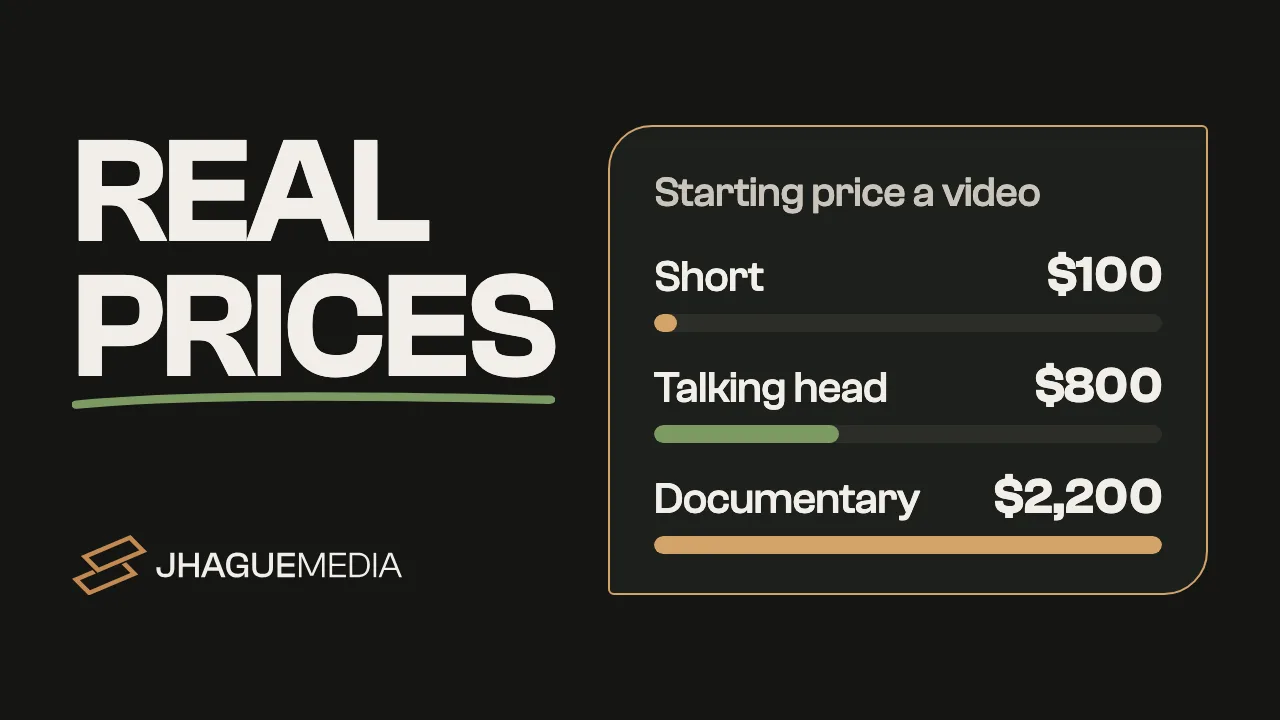
At JHagueMedia a YouTube documentary edit is from $2,200 for up to 12 minutes (+$200 per extra minute). The price depends on length, how much animation and archive research the story needs, and turnaround.
What's the difference between showing and telling in a documentary edit?
Telling repeats the narration on screen, often as text or a generic picture. Showing adds what the words can't: a scale comparison, a map, a timeline, a real document. If the picture could sit in any video on the topic, it's telling.