I run a YouTube agency from Johannesburg, and I started out as a freelance editor myself, so I get asked this a lot: how do you actually find a good video editor in South Africa, and what should you look for? There's a lot of talent here, but there's also a big gap between someone who can cut footage and someone who can help a video do well on YouTube.
So here's how I'd go about it if I were hiring a video editor in South Africa for my own channel or business.
Freelancer, in-house or agency?
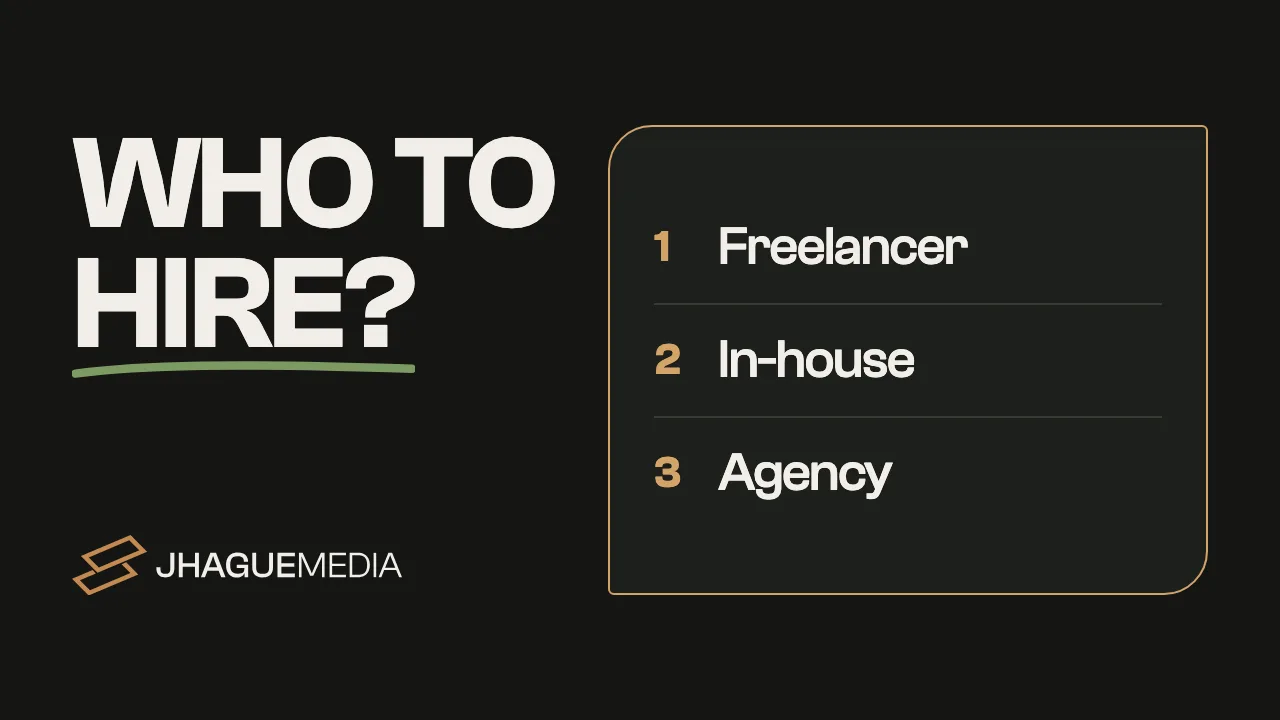
There are really three ways to hire a video editor in South Africa. The right one depends less on budget than you'd think, and more on how much video you make.
| Compared | Freelance editor | In-house editor | Agency or studio |
|---|---|---|---|
| Best for | One format, a few videos a month | Daily content, or video across the whole business | Growth, several formats, editing plus thumbnails and strategy |
| How you pay | Per video or per hour | A monthly salary | Per video or a monthly package |
| Time to get going | Days | Weeks (hiring, equipment, onboarding) | Days to a couple of weeks |
| If they're sick or leave | Your schedule stops | Your schedule stops, then you rehire | Someone else picks it up |
| How much you manage | Some | The most | The least |
Where to find video editors in South Africa
- Upwork. A huge pool of editors, including many South Africans, with reviews and protected payments. It's where I found my first long-term client as an editor.
- YT Jobs. A job board built for YouTube creators, editors and thumbnail designers. Good if you want someone who understands YouTube specifically.
- LinkedIn. Useful for corporate and B2B video, and for editors in Johannesburg and Cape Town who want in-house roles.
- Referrals. Ask South African creators and production companies whose work you like who edits for them.
- Agencies. If you'd rather hire a team than one person, a video editing company or YouTube agency handles the management for you.
What to look for in a video editor
Full videos, not just a showreel
Showreels are built to impress, and most are a fast montage of effects. But what does a 60-second montage tell you about whether someone can hold a viewer for ten minutes? Very little. Ask for two or three full videos that are still live, and watch them properly.
 The Spaceship Design So Good We're Not Allowed to Use ItThoughty2
 We Have a Big Problem With Bodies On EverestThoughty2
Story first
Does the opening make you want to keep watching? Does the video have a shape, or is it a string of clips? Editing is an act of service to the story, and the best editors know when to hold back. In my experience, that restraint is the rarest skill of all.
Clean sound
Bad audio loses viewers faster than plain visuals. Listen to their videos with headphones, because that's how a lot of your viewers will hear them.
An understanding of the platform
A great wedding or corporate editor isn't automatically a great YouTube editor. YouTube needs a strong first 30 seconds, pacing that holds attention and a thumbnail that matches the video's promise. Ask them how they think about retention.
Reliability and communication
Do they reply quickly, ask good questions about your brief and hit deadlines? This matters as much as talent. A brilliant editor you can never reach will cost you more than a good one who always shows up.
A few things specific to South Africa
- Backup power and internet. Ask how they handle power cuts and slow connections. A good editor has a plan, like a UPS or inverter, and somewhere else to work and upload from.
- Large files. Raw footage can be hundreds of gigabytes. Agree on how you'll share it (cloud storage, a shared drive or a courier with a hard drive) before the first project.
- Rand or dollars. Many South African editors also work for overseas clients and may quote in US dollars. Agree on the currency and payment method up front.
- Time zones. South Africa runs on SAST (GMT+2) all year, with no daylight saving. That puts it 1 to 2 hours ahead of the UK and close to most of Europe, so working hours overlap almost completely. With the US East Coast it's 6 to 7 hours ahead, so your morning is a South African editor's afternoon, which works well for overnight turnarounds.
What a video editor costs in South Africa
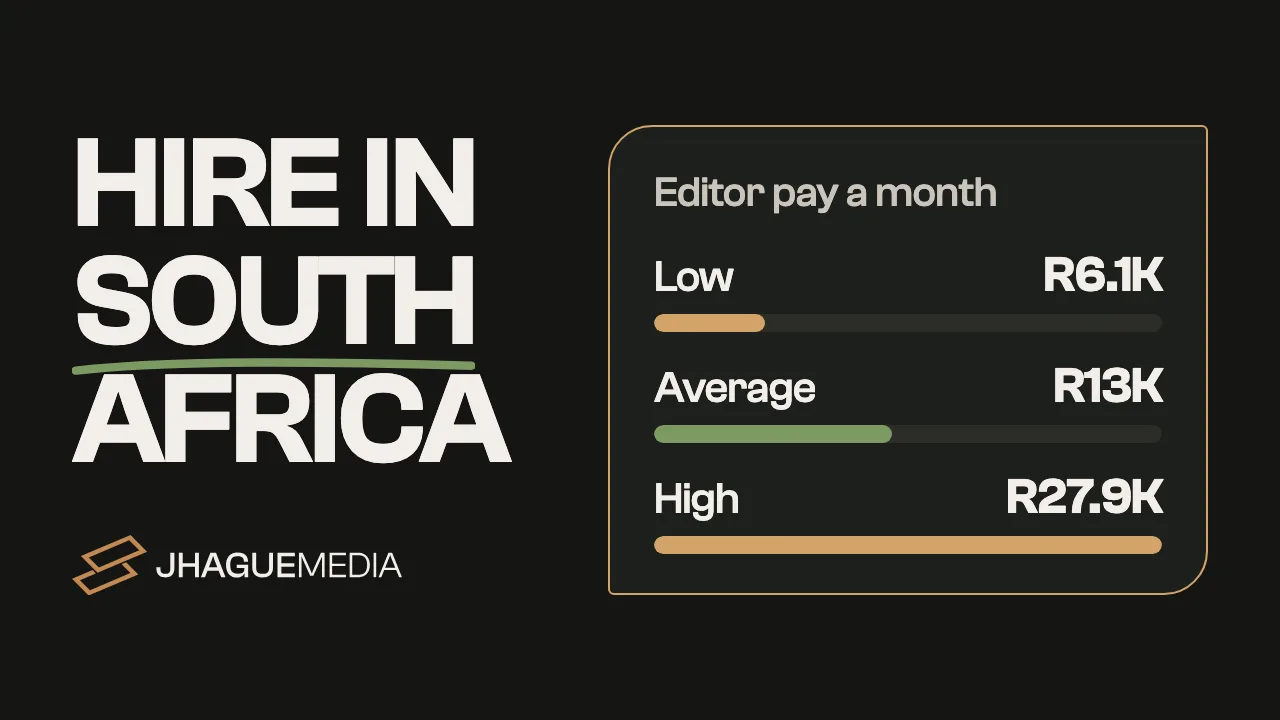
For in-house roles, Indeed South Africa lists an average video editor salary of R13,047 a month, with a range from about R6,108 to R27,868 (Indeed, updated November 2026, based on job postings). Senior editors and specialists earn more.
Video editor salaries in South Africa (rand per month)
- Lower endR6,108
- AverageR13,047
- Upper endR27,868
Freelance video editing rates in South Africa vary just as much, so the best way to compare is to send the same brief to a few editors and put their quotes side by side. Price per video rather than per hour where you can, so you know the cost before work starts.
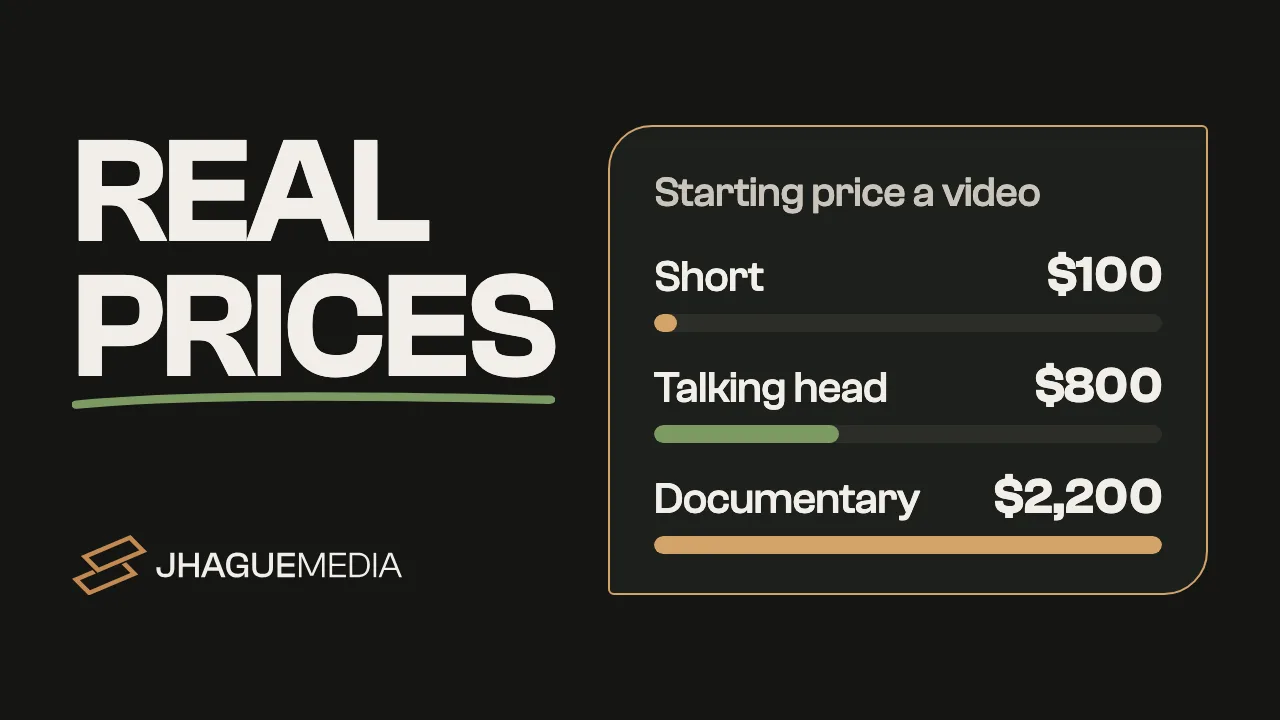
Our own prices are published in US dollars because we work with clients worldwide: a talking-head YouTube video is from $800. Our YouTube editing cost guide breaks that down by format.
Run a paid test edit
We use a trial task for every editor we hire, and I'd recommend the same to anyone. Give two or three candidates the same real footage and the same brief, pay them for their time, and compare the results. You'll learn more from one test than from ten interviews. Our guide to hiring a YouTube video editor covers the brief and the test in more detail.
Red flags to watch for
- A showreel only, and no full videos you can watch.
- Videos in their portfolio they can't explain their part in.
- Prices that are far below everyone else's. Very cheap usually means rushed, or no time for the story.
- Slow or vague replies before you've even hired them. It rarely gets better afterwards.
- No plan for power cuts, backups or getting large files to you.
- Unwilling to do a paid test, or asking for a large deposit before any work.
Getting the first month right
Most editor relationships are won or lost in the first few weeks, and most of what decides it is on your side of the table. A few things make a big difference:
- Share two or three reference videos for the pacing and style you want, plus your logo, fonts and colors.
- Send organized footage with an outline or script, and mark the moments that matter.
- Give specific feedback ("the first 30 seconds drag") rather than vague notes ("make it pop"), and try to reply within a day.
- Check in weekly for the first month, then less once you're in a rhythm.
- Share how the videos perform, so they learn what works for your audience.
Questions to ask before you hire
- Can I see full videos you edited that are still live?
- What did you actually do on each one: the full edit, or polishing someone else's cut?
- How do you handle load-shedding, internet outages and large file transfers?
- How many rounds of feedback are included?
- Do you quote in rand or dollars, and per video or per hour?
- Can you do thumbnails, or should I find someone else for those?
If you're weighing up a freelancer, an agency or hiring in-house, our agency vs freelancer vs in-house guide goes through the trade-offs.
FAQ
How much does a video editor earn in South Africa?
Indeed South Africa lists an average of R13,047 a month for video editors, based on job postings, with experienced and specialist editors earning more.
Where can I find a freelance video editor in South Africa?
Upwork, YT Jobs and LinkedIn are the best places to start, along with referrals from creators and production companies whose work you like.
Is it safe to hire a video editor in South Africa remotely?
Yes, if you hire the way you would anywhere: check full videos and reviews, start with a small paid test, use a platform with protected payments or a clear written agreement, and pay per video until you trust each other.
How do I deal with load-shedding?
Ask about it before you hire. Good South African editors have backup power, cloud backups and a second place to work, and they build a little buffer into deadlines.
Should I hire a local editor or work remotely?
For YouTube, remote works well. What matters more is their portfolio, their reliability and how well they understand the platform. A local editor helps if you need them on set or in your office.