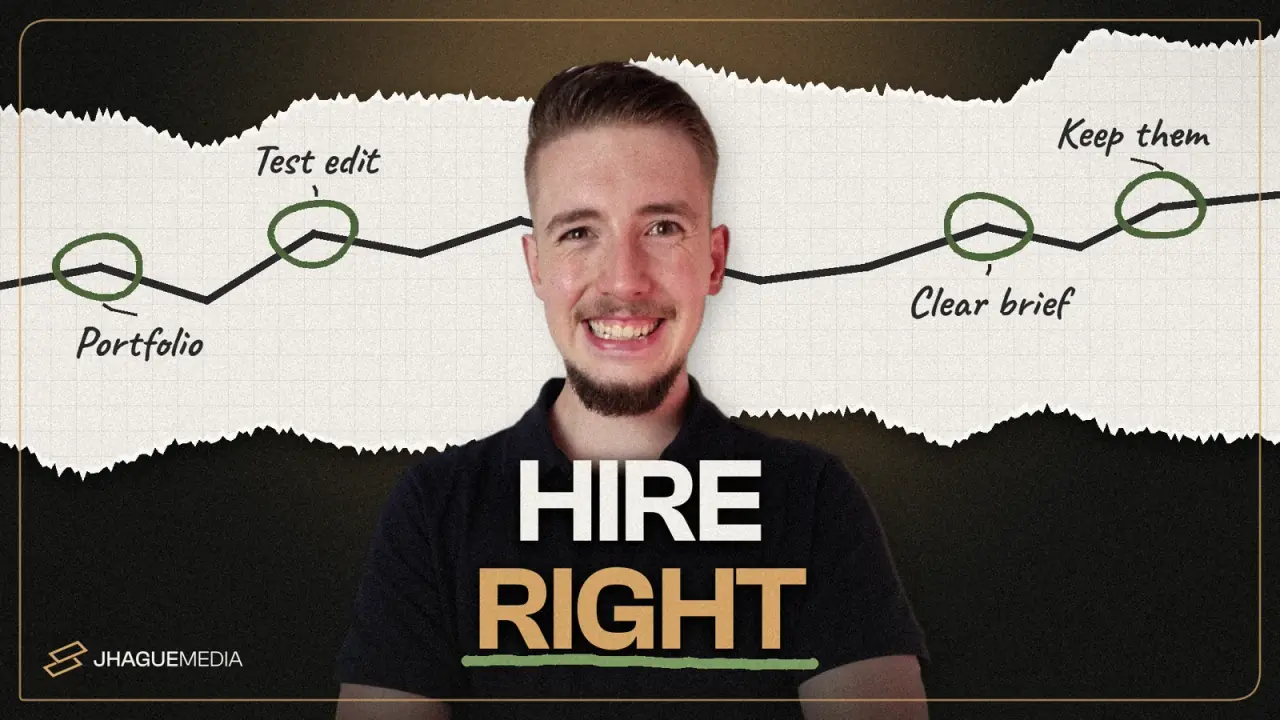
I've been on both sides of this. I started as a freelance editor sending proposals on Upwork, and today I hire editors and designers for our own team. Most bad hires don't come from bad editors. They come from an unclear idea of the job, a portfolio judged on the wrong things and no real test before the first paid video.
This is the process I'd follow if I were hiring a YouTube editor for my own channel.
Know what you need before you look
"A YouTube editor" covers a lot of different skills. Someone brilliant at fast-paced Shorts may not be the right person for a 20-minute documentary, and a great podcast editor may never have built a story from scratch. Before you post anything, write down three things:
- The format: talking head, vlog, documentary, podcast, Shorts or a mix.
- The volume: how many videos a month, how long each one is, and how fast you need them back.
- What good looks like: two or three videos from other channels that feel like what you want to make.
Those reference videos will do more work than any job description.
Where to find YouTube editors
- Upwork, which has a huge pool, client reviews and protected payments. It's where I found my first long-term client.
- YT Jobs, a job board built specifically for YouTube creators, editors and thumbnail designers.
- Referrals from other creators in your niche. Ask who edits the channels you admire.
- Agencies, if you'd rather hire a team than one person. More on that below.
How to judge an editor's portfolio
Showreels are built to impress, and most of them are a fast montage of effects. That tells you very little about whether someone can hold a viewer for ten minutes. Ask for two or three full videos instead, and watch them properly.
- Does the opening make you want to keep watching?
- Does the video have a shape, with a beginning, a middle and an end, or is it a string of clips?
- Is the sound clean and even? Bad audio loses viewers faster than plain visuals.
- Do the graphics and b-roll explain something, or are they just decoration?
Also ask what they actually did on each video. Did they cut it from raw footage, or polish someone else's rough edit? View counts are worth checking, but packaging and the channel's audience drive most of them, so treat them as context rather than proof.
Run a paid test edit
We use a trial task for every editor we hire, and I'd recommend the same to any creator. Give two or three candidates the same real footage and the same brief, pay them for their time, and compare the results. You'll learn more from one test than from ten interviews: how they read a brief, how they structure a story, how they communicate and whether they hit the deadline.
Paying for the test matters. Good editors are busy, and the best ones won't work for free.
Write a brief your editor can use
Most revision rounds come from a thin brief. A good one includes:
- The goal of the video and who it's for.
- An outline or script, with the key moments marked.
- Two reference videos for pacing and style.
- Your brand assets: logo, fonts, colours, intro and outro.
- Footage that's organised and named, with the good takes noted.
- The deadline and how many rounds of feedback are included.
If you also want the thumbnail handled, say so up front. Packaging and editing work best when they're planned together, which is why our thumbnail service and editing are often one package.
Freelancer or agency?
A freelancer is usually the better choice when you publish one format at a steady pace and you're happy to manage the process yourself. You'll pay less per video and work directly with the person editing.
An agency makes more sense when you need several formats, a reliable schedule or someone to own the whole pipeline: editing, thumbnails, Shorts and strategy. You pay more per video, and the team covers holidays, sick days and spikes in volume. That's how we work with channels like Daily Drop, which we helped launch from zero to over 200,000 subscribers. Our guide to YouTube editing costs breaks down the numbers.
How to keep a good editor
Finding a great editor is hard, so the last step is keeping them. Give specific feedback ("the first 30 seconds drag") rather than vague notes ("make it pop"). Send work on a predictable schedule, pay on time, and share how the videos perform so they can learn what works for your audience.
The first client who replied to my Upwork proposals became a five-year partnership. The best results we've had have all come from long relationships like that, where the editor knows the channel as well as the creator does.