Case study · Video podcast · College baseball
The RosterPilot Show: a podcast YouTube recommends
RosterPilot helps high school baseball players get recruited to college. Its founder, Patrick Jones, interviews college coaches every week. We took over the edit, the thumbnails and the Shorts in September 2026. This is what changed, with the real numbers from the channel's YouTube Studio.

Figures from RosterPilot's YouTube Studio, read on 23 November 2026. Recent videos are still collecting views, so their numbers will only go up.
A small channel with a big guest list
The RosterPilot Show had everything a podcast needs except reach. Patrick books guests most shows would love to have: LSU's director of pitching development, Division I recruiting coordinators, MLB scouts. But the channel had 1,856 subscribers, and in the first eight months of 2026 a typical episode got about 420 views.
The audience is clear and valuable: players aged 15 to 18 and, even more, their parents. Fathers aged 45 to 54 are the channel's largest group of viewers. These people are making a decision that costs or saves them tens of thousands of dollars, and they search for answers.
The titles were labels ("Coaching With Purpose | Keith Madison") and nothing in the packaging told a stranger why they should watch. Only about half the views came from YouTube recommending the videos. The rest came from people who already followed Patrick.
The full edit of each episode, the title and thumbnail for every video, and a set of Shorts cut from each conversation. One team doing all three, so the episode, its packaging and its clips tell the same story.
Get YouTube to recommend the show to parents and players who have never heard of RosterPilot, and turn those viewers into people who know Patrick's name.
Every episode, before and after
Each bar is one long-form episode. Grey bars are the 17 episodes from January to August 2026. Green bars are ours. The line is the old median of 422 views.
EP.416 is the channel's most-viewed long-form episode in over a year, and EP.415 is third. EP.416 is at 4.97x the old median and EP.415 at 3.3x. EP.418 passed the median in its first week.
One didn't work, and that's worth showing too. EP.417 (Cubs Charities) stalled at 303 views. It's a strong conversation, but it's about a charity program in one city, not about getting recruited. YouTube showed its thumbnail 1,200 times, too few people clicked, and it stopped pushing it. The lesson for the show: the topic has to match the reason the audience subscribed, every single week.
One thumbnail system, so the show is recognisable
Before a video can be watched it has to be clicked. We designed one system and used it on every episode, so a viewer who liked one episode spots the next one in their feed.
Patrick and the guest, close up. Faces are what people notice first in a feed, and two of them signal a conversation, not a lecture.
"6 hours daily." "Why good pitchers fail." The text doesn't repeat the title. It adds the one idea that makes you need to know more.
One word in a red block: fail, early, daily. It's the word a worried parent or player reacts to.
The RosterPilot mark and episode number in the corner. It tells you this is a series, and long-time viewers can tell which ones they've missed.
| Episode | Impressions | Click-through | Avg. view duration | From homepage & browse | Views |
|---|---|---|---|---|---|
| EP.415 · Colton Hahn | 6.2K | 6.3% | 7:41 | 73.5% | 1,406 |
| EP.416 · Logan Hullette | 12.0K | 4.4% | 9:15 | 77.1% | 2,098 |
| EP.417 · Chris Thompson | 1.2K | 4.0% | 7:28 | 85.7% | 303 |
| EP.418 · Jamie Tutko (First 7 days) | 5.2K | 3.2% | 10:36 | 82.3% | 634 |
| Last episode before us · Phill Shallenberger | 2.7K | 3.9% | 10:57 | 54.0% | 365 |
Why "from homepage & browse" matters: it's the share of views YouTube created by recommending the video to people who weren't looking for it. Before us, about half the views came from there. On our episodes it's three-quarters or more, which means the views come from YouTube, not from Patrick sharing links.
Edited so it feels like one unbroken conversation
Good podcast editing should be invisible. We cut a lot (each episode loses the warm-up, the false starts and the tangents), but the viewer should never feel a cut. No jump-cut stutter, no audio pops, no sudden change in energy. It should feel like sitting at the table with two people who forgot the cameras were there.
That matters for numbers, not just taste. On a 30 to 40 minute episode, our viewers watch 7½ to 10½ minutes on average. YouTube reads that time as proof that the people it recommended the video to were glad they clicked, so it recommends it to more.
- 01
The first 30 seconds play the most surprising thing the guest says, before any intro. Like the openings on the biggest interview shows, it proves the episode is worth your time before it asks for any.
- 02
Who the guest is and why they're worth hearing, with a lower-third title and a line about their record. A parent who has never heard of Jamie Tutko learns in 10 seconds that he's developed big-league pitchers at LSU.
- 03
We take out repetition and dead air but keep the pauses where someone is actually thinking. Real conversations breathe, and the honesty is why people trust the show.
- 04
The description answers the questions parents actually type into YouTube. EP.416 still gets search traffic for 'd1 baseball' and 'college baseball fall ball'.
Why we cut Shorts, and how
A podcast episode asks a stranger for 35 minutes. A Short asks for 30 seconds. Shorts are how new people meet Patrick and his guests, and every one points back to the full episode.
How we build each Short
- First secondStart loud, start on the point
No intro and no warm-up. The Short opens on its strongest line with the energy up, the way the big interview shows open their clips, because the first second decides whether the thumb keeps scrolling.
- 0–3sThe headline on screen
A RosterPilot-branded card with both faces and the idea in bold ("Here's how to get D1 coaches to sign you"), so the viewer knows the payoff before anyone speaks. It does the job of a thumbnail inside the video.
- ThroughoutBranded split screen and captions
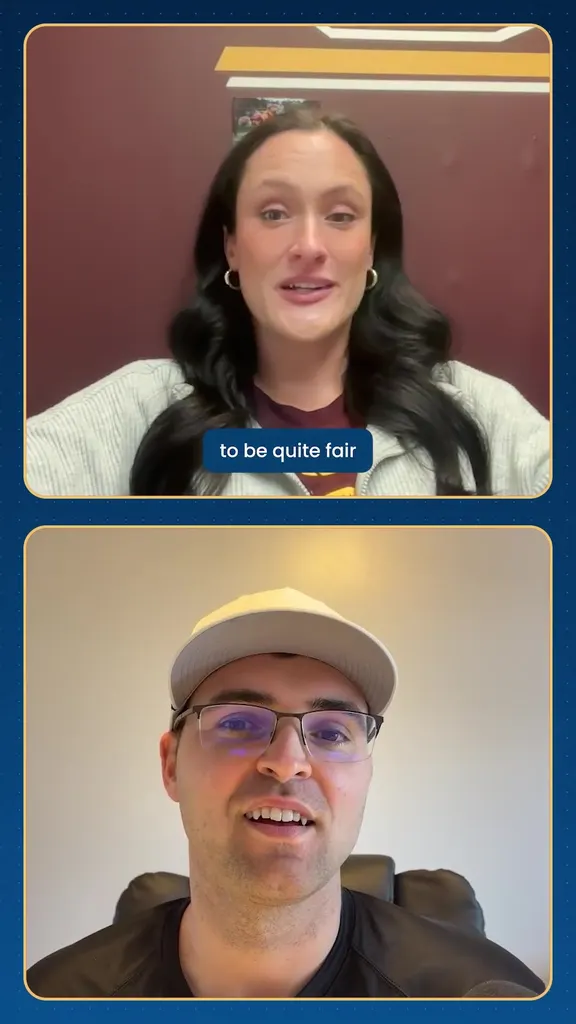
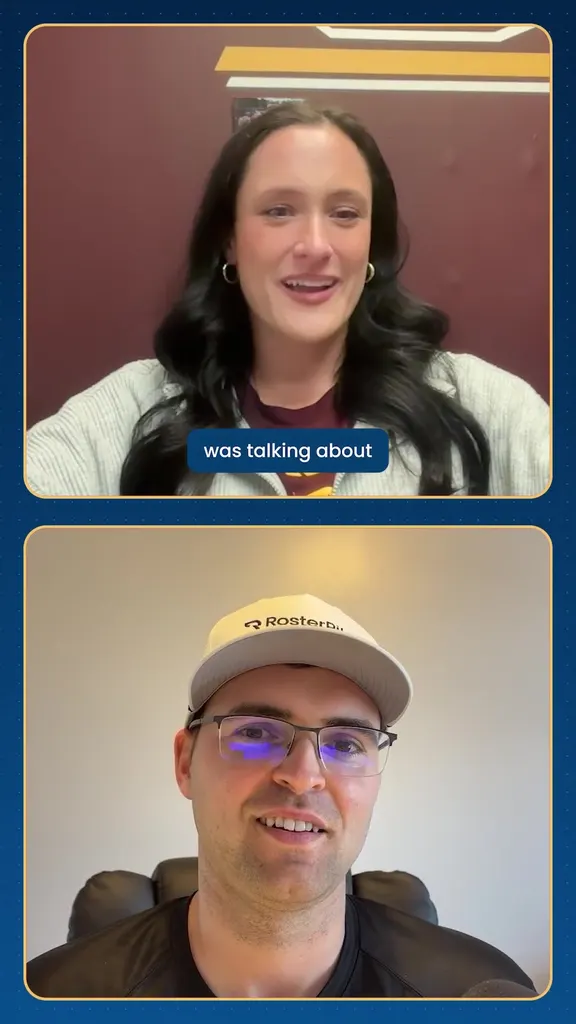
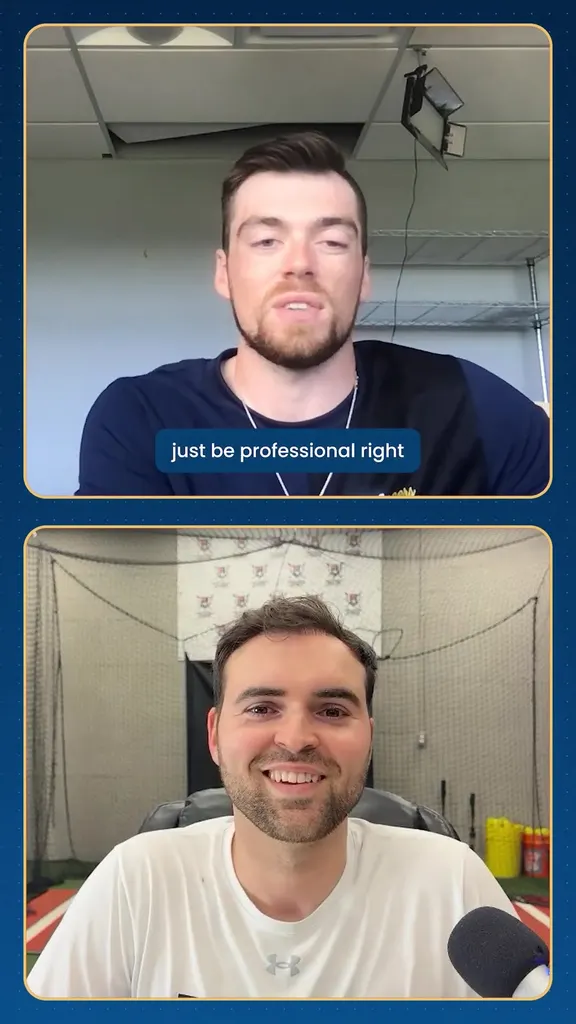
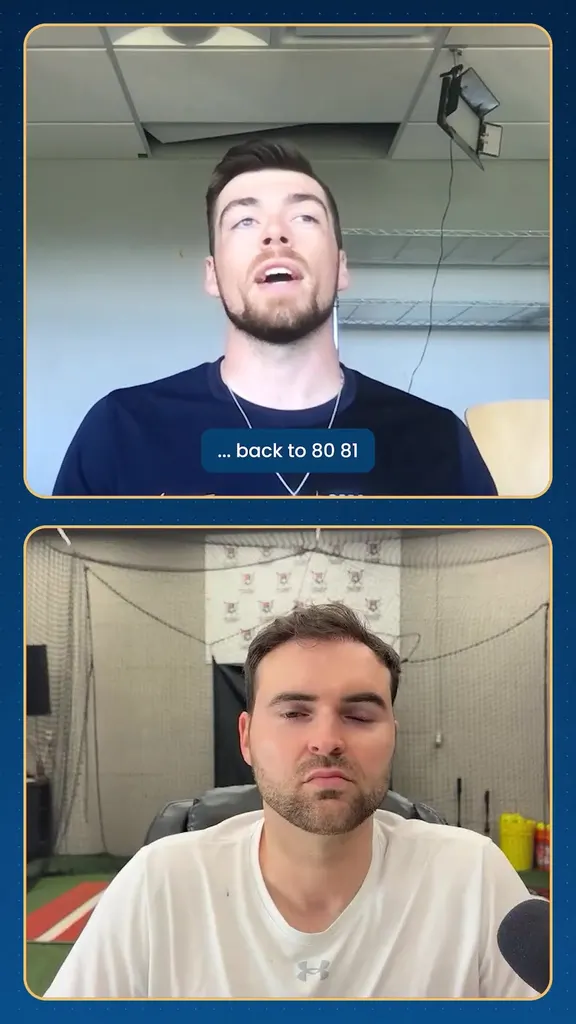
Guest on top, host below, both in gold-edged frames on the show's navy. You see the reaction as well as the answer, and the look matches the episode thumbnails. Captions come one phrase at a time, because most Shorts are watched with the sound low.
- Last 5sEnd on the point, not a sign-off
We cut straight after the line that lands. No "follow for more". The loop back to the opening keeps people watching, and the link to the full conversation sits in the description.
How to Get D1 Coaches to Sign You
RosterPilot
What Hitting Coaches Look For in a Player
RosterPilot
The One Mistake Players Make With College Coaches
RosterPilot
What Hitting Coaches Really Look For | WVU Baseball
RosterPilot
| Short | Guest | From | Why this moment |
|---|---|---|---|
| How to Get D1 Coaches to Sign You | Faith Hensley | EP.419 | Leads with the question every recruit is asking, so the payoff is clear before Faith says a word. |
| What Hitting Coaches Look For in a Player | Faith Hensley | EP.419 | A college coach's checklist in under 40 seconds: specific, useful, and it stands on its own without the episode. |
| The One Mistake Players Make With College Coaches | Nathanael Rorie | EP.420 | 'One mistake' is a promise the viewer can hold us to. The clip delivers it and ends on the point. |
| What Hitting Coaches Really Look For | WVU Baseball | Nathanael Rorie | EP.420 | Released a week before the full episode, so the clip builds interest in it rather than following it. |
Published on our channel on 23 November 2026, so there are no view numbers to show yet; we'll add them once they've had time to run. Every Short has to stand on its own, because most Shorts views come from the Shorts feed: people who have never heard of the show.
Every episode we've edited
Click any episode to watch it on RosterPilot's channel.
 EP.415 · 21 Sep 2026Why 18-Year-Old Recruits Are Being Left BehindColton Hahn, Hitting coach, Transylvania University1,406 views
 EP.416 · 12 Oct 2026The D1 Baseball Path Nobody Talks AboutLogan Hullette, Recruiting coordinator, Walters State2,098 views
 EP.417 · 23 Oct 2026Why Talent Isn't Everything in Travel BaseballChris Thompson, Cubs Charities303 views
 EP.418 · 16 Nov 2026LSU's Pitching Director: Baseball Has A Pitching ProblemJamie Tutko, Director of Pitching Development, LSU634 views · first 7 days
 EP.419 · 23 Nov 2026Why College Coaches Skip Your Recruiting EmailsFaith Hensley, Hitting coach, Central Michigan SoftballReleased today
- Coming 30 Nov 2026EP.420 · 30 Nov 2026Inside West Virginia's $5 Million Biomechanics LabNathanael Rorie, Director of Analytics, West Virginia BaseballScheduled
What this means for your show
If you run a video podcast and it isn't growing, the problem is rarely the conversations. It's usually one of these.
- 01
"Keith Madison" means nothing to someone who hasn't heard of Keith. Title the episode with the idea that's in it, and put the name second.
- 02
Pick one system and stick to it. Viewers should recognise your show before they read anything.
- 03
Open on the best 30 seconds of the conversation. Thank the guest later.
- 04
A Short that only works as an ad for the episode won't travel. Cut moments that stand on their own, and let the strongest ones bring people to the full conversation.
- 05
Great guests on off-topic subjects get fewer clicks. Every episode should answer a question your audience is already asking.
- 06
Impressions, click-through rate and the share of views from browse features tell you exactly which of the above to fix first.
Have a podcast that deserves more viewers?
Tell us about your show. We'll look at your last few episodes and tell you honestly what we'd change first.